Table of contents
Create a successful customer loyalty program by taking inspiration from leading brands around the world that have mastered the art and science of customer loyalty.
Customer loyalty programs are nothing new. Scholars track their beginnings as far back as 1793, to an American merchant who handed out copper coins to returning customers.
Nowadays, companies use plenty more sophisticated ways to reward their most loyal buyers. Any business can start a loyalty program, but few programs amount to anything more than a distraction to the customer.
In order for a loyalty program to succeed, it has to combine three key ingredients:
- The economics of it have to support the business while being attractive to the customer,
- It needs to be perfectly aligned with customer behavior,
- It has to stand out from the countless other loyalty programs.
When a loyalty program truly works, it becomes a part of the business DNA, as is the case for Starbucks. In Q1 of 2023, 30+ million Starbucks’ Loyal Reward members generated 56% of its US revenue. As of Q1 2025, the company’s program boasts 34.6 million members.
Another loyalty program masterclass comes from one of the major airlines in the United States. In 2024, Delta Air Lines’ loyalty program generated more than $3.8 billion in revenue, 11% more than in 2023.
How can you replicate the success of these brands’ loyalty programs?
Why these loyalty program examples matter for your business
Creating a program as successful as Starbucks or Delta won’t be easy, but it’s doable. You just have to keep a few things in mind.
In their analysis of loyalty program trends, Boston Consulting Group found that “companies must deliver a differentiated experience with personalized benefits and relevant partnerships.”
BCG found that the average US consumer belongs to more than 15 programs. 15 brands competing for the same customers’ attention and loyalty. The competition is immense.
However, there is good news if US consumers aren’t the main target group of your business or you operate in a niche industry. In this case, loyalty programs are still few and far between, so there’s ample opportunity to win market share by being the first to offer a loyalty program.
Key success factors across all program types
A scientific analysis of loyalty program data from 40 years has shown that:
- Exclusive, member-only rewards consistently outperform simple discounts and general promotional offers in driving true customer loyalty
- Programs that create both behavioral changes AND emotional attachment are more successful than those focusing only on purchase incentives
In other words, you have to make loyalty members feel unique, and appeal to both their wallets and their emotions. As you’ll see in the examples below, brands with successful loyalty programs do this by:
- offering clear, immediate value that customers can understand instantly,
- integrating seamlessly across digital and physical touchpoints for a unified experience,
- using data to deliver personalized rewards and content,
- aligning with brand values and customer expectations in an authentic way,
- evolving continuously based on customer feedback and behavioral insights.
How we selected these loyalty program examples
We looked for proven financial impact, innovative approaches, and diverse industry representation. Each program demonstrates measurable business results through publicly available financial data, member growth statistics, or revenue attribution.
We’ve included examples of multiple program types, business models, and customer segments to show you how brands from different industries have molded loyalty programs to fit their needs and contribute to long-term growth.
Note that even though we put programs into different categories (points-based, tiered, etc.), most brands offer a combination of different types. Like the first brand you’ll see below, Kroger – they have one of the most successful free loyalty programs of all time, and they added an extra layer of a subscription-based program on top of it.
Points-based loyalty program examples
Points-based systems are the most popular loyalty program structure because they’re easy to understand. Buy more stuff, get more points – just like the merchant who gave out copper coins in 1793.
These programs work by rewarding customer purchases with points that they can exchange for future benefits. This inspires a feeling of ownership and encourages repeat purchases.
The best points-based programs combine simplicity with sophistication, offering straightforward earning mechanisms combined with personalization.
Kroger Plus – grocery loyalty at unprecedented scale
Kroger is a retail brand operating supermarkets and multi-department stores across the United States. Their Kroger Plus program has been going on since 2003 – first as a card, and then combined with an online account and mobile app.
As stated in their 2025 SEC filing, 95% of their customers are in the Kroger Plus program, making it one of the most successful loyalty programs in any industry.
The program is simple. It rewards customers 1 point per each dollar spent, along with special in-app deals and limited free grocery pickup.
On top of Plus, Kroger also offers Boost – a paid membership that doubles the points earned per $1, and includes popular video streaming service subscriptions and unlimited free grocery delivery.
All of this results in a program that’s highly valuable to loyal Kroger customers and the company itself. By monetizing the data collected through the loyalty program, Kroger has created an additional revenue stream.

Starbucks Rewards – the gold standard of mobile loyalty
We’ve already mentioned that, as of Q1 2025, Starbucks Rewards has 34.6 million active US members. But why is that, and how does the program benefit Starbucks and its customers?
On the surface, it’s simple:
- customers join the Starbucks Rewards app,
- once they’re in, every $1 spent is rewarded with 1 star,
- they can quickly start redeeming stars for small rewards (like 25 stars for an extra espresso shot), or save them for bigger rewards (like 400 stars for a cup, tumbler, or other Starbucks merchandise).
But that’s just one part of the program. It might seem like a simple reward program, but Starbucks has strategically optimized it to become a growth enabler for their business:
- During Double Star Days, members earn two stars for each $1 spent, which can drive higher customer traffic to stores during typically slow days.
- When members use the prepaid digital Starbucks Card instead of cash or credit/debit cards, they also earn two stars instead of one, which drives higher interest in Starbucks’ own payment option.
- By partnering up with other brands, like Delta or Bank of America, and connecting their loyalty systems together, Starbucks creates an even bigger incentive to join the Rewards program.
By optimizing their loyalty program to boost both customer value and strategic business results, Starbucks has created a win-win situation.

CVS ExtraCare – pharmaceutical-grade loyalty program
74 million consumers are part of ExtraCare, the free loyalty program of the largest pharmacy chain in the US – CVS.
For people that regularly shop at CVS, it’s a no-brainer. Once they join the program, they can:
- buy products at sale prices,
- get personalized discounts,
- earn 2% of their purchases back in ExtraBucks Rewards.
On top of that, CVS added a paid program called ExtraCare Plus, which extends loyalty benefits with:
- free same-day delivery and shipping,
- 20% off CVS Health brand products,
- a 24/7 pharmacist helpline.
But this is just the consumer side of the picture. On the business side, the data from ExtraCare provides a robust data set for CVS’ retail media network, which continuously drives customer engagement and contributes to long-term growth. The vast amount of data enables the company to understand the customer journey across all digital and physical touchpoints.

Tiered loyalty program examples
Tiered programs are peak gamification – they literally offer an opportunity to level up as the customer of a brand. In some cases, higher brand loyalty levels can even be a signal of high status. That’s often the case with airline loyalty programs like Delta’s SkyMiles, where the highest level (Delta 360°) is invitation-only and available to only the richest, most influential flyers.
For the brands, tiered programs of course encourage customers to spend more, but they have the added ability to turn loyal customers into hardcore brand advocates.
Delta SkyMiles – aviation excellence through strategic partnerships
With 120 million members worldwide, Delta SkyMiles has become the world’s largest airline loyalty program. The program generated more than $3.8 billion in revenue in 2024, demonstrating how loyalty can become a valuable layer on top of the core transportation business.
It works like this:
- members earn miles for flying Delta and partners,
- they redeem those miles for flights, upgrades and experiences,
- the four-tier Medallion structure (Silver, Gold, Platinum, Diamond) provides clear progression markers based on annual spending.
But beneath the surface, SkyMiles is a revenue powerhouse thanks to sophisticated partnerships and constant evolution. The American Express co-brand partnership alone generated $2.0 billion just in Q1 2025, making it one of the most lucrative loyalty partnerships in any industry.
The program’s recent focus on Medallion Qualifying Dollars (MQDs) rather than miles flown reflects a fundamental business model shift. This change transforms Delta from an airline with a loyalty program into a travel and financial services company that operates planes. Credit card spending, vacation bookings, and partner activities now contribute equally to elite status, expanding earning opportunities far beyond flying while driving higher customer lifetime value.
Delta’s partnerships span hotels, rental cars, dining and everyday spending. That’s multiple daily touchpoints that reinforce brand loyalty. SkyMiles is proof that well-executed loyalty programs can fundamentally reshape business economics.

Target Circle – competing with Amazon through tiers
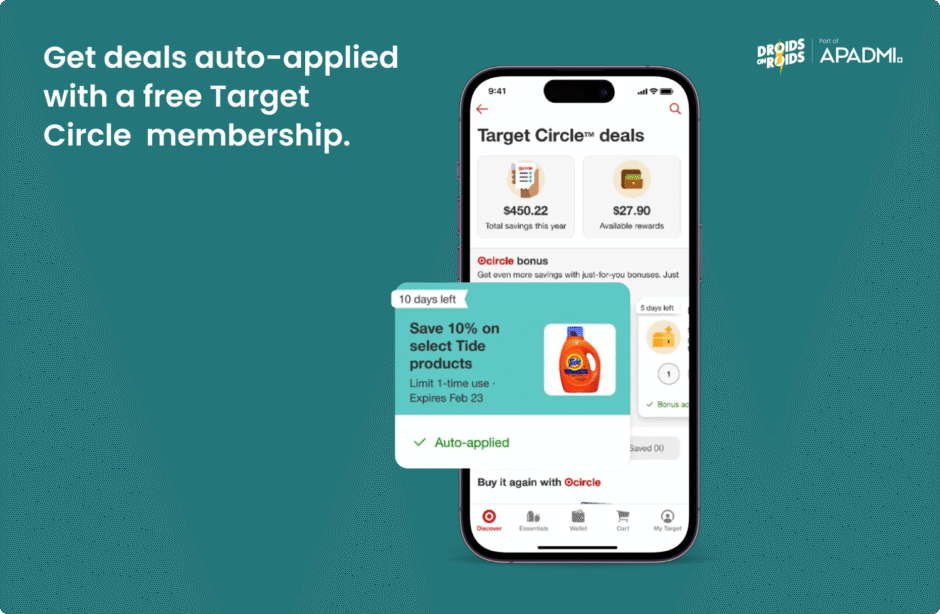
With over 100 million members, Target Circle represents one of retail’s largest free loyalty programs. Target added 13 million new members in 2024 as the retailer redesigned the program with a three-tier structure directly challenging Amazon Prime’s dominance in subscription commerce.
The program works like this:
- Target Circle (free) provides automatic deals, personalized bonuses, and 1% rewards on purchases,
- Target Circle Card adds 5% off every purchase plus extended returns and free shipping benefits,
- Target Circle 360 ($99/year, $49 for cardholders) includes unlimited same-day delivery and exclusive monthly perks.
But Target’s strategic transformation goes far beyond loyalty tiers. Target Circle 360 members spend eight times more while shopping six times more often than non-members, so the program has a powerful effect on customer behavior.
The program’s competitive positioning targets Amazon’s core strength – convenience. By removing price markups from 100+ retailers through its Shipt acquisition, Target created a digital shopping ecosystem that matches Prime’s convenience while leveraging Target’s physical store advantages. Target executives believe Circle 360 can triple its membership over the next three years, positioning the retailer to compete directly with Amazon’s subscription model.
Target is a traditional retailer that uses tiered loyalty to compete with a digital-first competitor. The loyalty program is a compelling alternative to Amazon Prime while playing to Target’s unique strengths in physical retail.
AdiClub – athletic loyalty through community and exclusivity
With 303 million members across 50 countries, Adidas’ AdiClub has become one of the world’s largest sports loyalty programs.
It works like this:
- members earn 10 points per $1 spent, plus points for workouts, reviews, and brand engagement,
- four tiers unlock increasingly exclusive benefits from free shipping to priority sneaker drops,
- points redeem for discount vouchers, exclusive products, and “money-can’t-buy” experiences.
AdiClub’s strategic goal is to align rewards with Adidas’ dual brand identity of fashion and sport. Members interested in style get different rewards than athletic customers, who can earn points through the Adidas Running and Training apps. It’s one of the only loyalty programs where members level up through physical activity, not just purchases.
Of course, there’s ecosystem integration going on as well – like the recent partnership with Strava, where Adiclub members can redeem points for premium subscriptions to the app. But the program’s most coveted feature is monthly exclusive sneaker redemptions using points. This transforms product launches into cultural events, driving engagement and social sharing.
Adidas has created a program that transcends typical retail loyalty. It’s a lifestyle ecosystem that reinforces brand desire without relying on discounts.

Subscription-based loyalty program examples
Subscription loyalty programs are a shift from traditional earn-and-burn models to immediate value delivery. By charging upfront fees, these programs create psychological commitment. The trick is, the benefits that customers get have to justify their investment. The most successful subscription programs combine convenience, savings, and exclusive access in ways that become integral to customers’ daily routines.
Costco Membership – wholesale loyalty
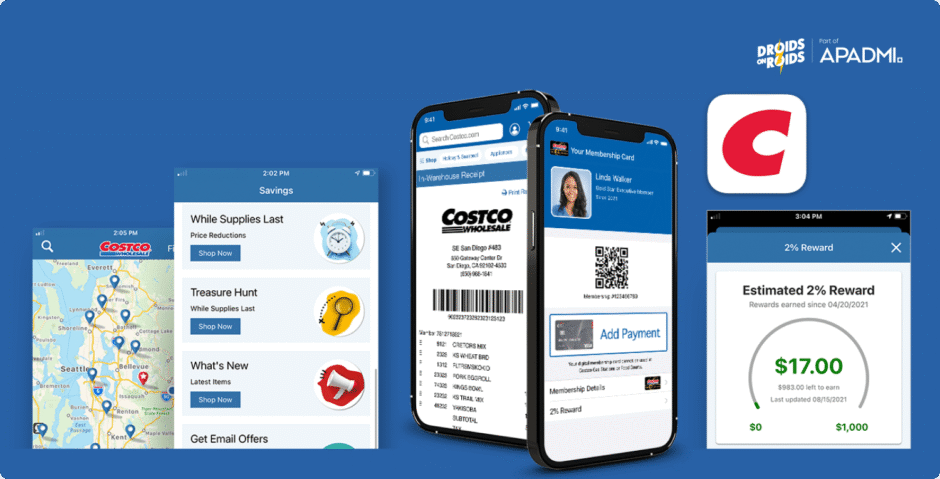
Costco’s membership fees from their 137 million members generated $4.8 billion in revenue during fiscal 2024, with a 90.4% renewal rate. Unlike most loyalty programs, Costco’s business model makes membership virtually mandatory before you can buy anything (except for a few basic items), turning potential friction into a value proposition.
It works like this:
- Gold Star membership ($65) provides warehouse access and bulk pricing,
- Executive membership ($130) adds 2% cash back on purchases, capped at $1,250 annually,
- Both tiers include exclusive access to Costco services and Kirkland Signature products.
The program’s success stems from visible value delivery. The Executive tier’s 2% cash back creates a self-reinforcing cycle where higher spending reduces the membership cost.
Costco proves that subscription loyalty doesn’t require complexity. The company focuses on three core elements: limited SKUs that create treasure hunt excitement, consistent Kirkland brand quality, and bulk pricing that makes savings obvious at checkout.
DoorDash DashPass – redefining food delivery economics
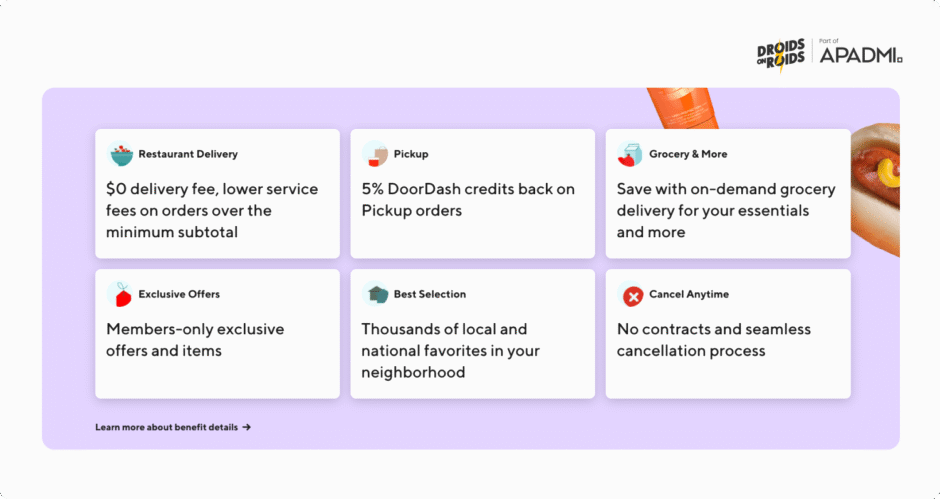
DashPass reached 22 million subscribers combined with Wolt+ by the end of 2024. DoorDash generated $10.72 billion in revenue and achieved its first full year of positive GAAP net income. The $9.99 monthly subscription played a big part in this success. It provides unlimited free delivery, fundamentally changing customer behavior around food delivery.
It works like this:
- DashPass members get unlimited free delivery on orders over $12,
- reduced service fees and exclusive offers create additional savings,
- integration across grocery, convenience, and alcohol delivery expands utility.
DashPass demonstrates the power of subscription psychology in transforming unit economics. DoorDash executives reported that DashPass had reached “an all-time high in terms of its subscriber base” during Q2 2024, while order frequency reached all-time highs company-wide.
The subscription model creates competitive moats that extend beyond food delivery. DashPass validates the subscription approach for on-demand services while making customer switching to competitors costly.
AMC Stubs A-List – cinema loyalty through subscription
AMC Stubs has grown to 34 million households, with AMC Stubs A-List seeing significant growth post-pandemic. The subscription program charges $19.95-$23.95 monthly for up to 4 movies per week, and helps AMC drive more visitors to their theatres.
Customers get:
- unlimited access to premium formats including IMAX and Dolby Cinema,
- free large popcorn and drink upgrades, waived online fees,
- early reservations and no blackout dates.
A-List fills otherwise empty seats and boosts concession revenue. It helped AMC achieve all-time records for admissions revenue per patron, food and beverage revenue per patron, and total revenue per patron in 2024. The subscription psychology drives regular attendance, with AMC’s CEO noting upcoming A-List program enhancements for 2025 after nearly a year of development.
The program leverages behavioral lock-in to optimize capacity management and premium format utilization across AMC’s 900+ theatres globally.

Industry-specific loyalty program innovations
From telco to banks, loyalty programs can be found in nearly all industries. Here are a few of the most innovative examples.
Redefining telco loyalty – T-Mobile Tuesdays
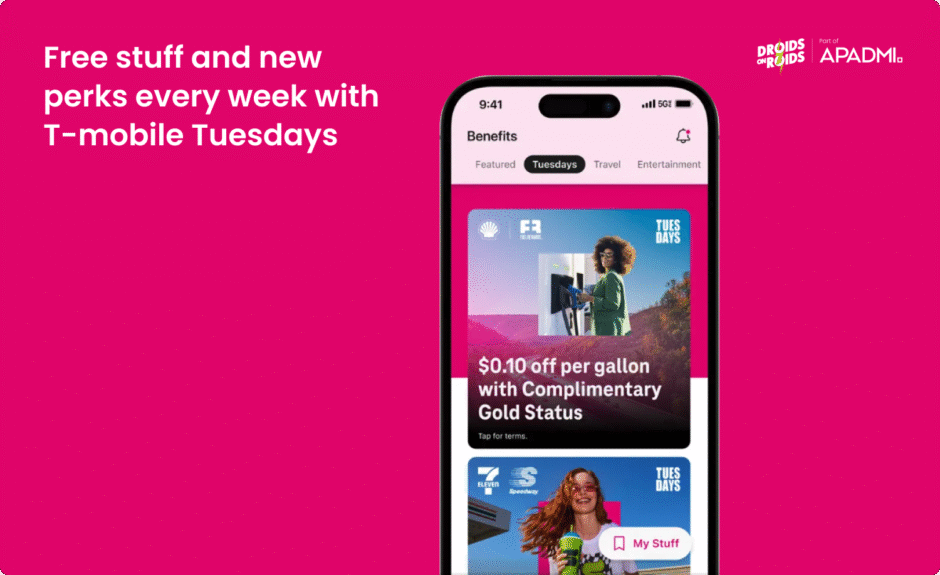
T-Mobile offers a fresh take for telecommunications loyalty by abandoning points for weekly surprises. Over 30 million customers have downloaded the app since launch. Customers have enjoyed over $1 billion worth of freebies in five years, and participation reached 5 million people in a single day at its peak.
Through T-Mobile Tuesdays, customers get:
- weekly freebies and exclusive discounts from various brands with no purchase requirements,
- access to exclusive deals, content, and chances to win experiences,
All without point-tracking or complex redemption processes.
T-Mobile Tuesdays drives measurable loyalty improvements in a notoriously difficult industry. The telecommunications industry averages just 31 NPS, but T-Mobile achieved an all-time-high NPS of 82. T-Mobile Tuesdays users specifically show 14 points higher NPS than industry average, while churn was cut in half and the program helped T-Mobile achieve higher-than-ever service satisfaction.
The program proves that thanking customers without strings attached creates deeper engagement than traditional loyalty mechanics in commoditized industries.
Financial services loyalty – Chase Ultimate Rewards
Chase Ultimate Rewards is an example of how banking loyalty programs can compete with airlines and hotels. The program spans multiple card portfolios (Sapphire travel cards, Freedom cash back cards and Ink business cards), creating a broad ecosystem that serves diverse customer segments.
Customers get:
- 1:1 transfer ratios to 14 travel partners including 11 airlines and 3 hotel programs,
- points worth up to 2 cents each when redeemed through the Chase Travel portal,
- point pooling across multiple Chase cards in household accounts.
The program’s strength lies in its flexibility and extensive transfer partner network, making points valuable across multiple redemption options. Chase’s card ecosystem serves different spending patterns, and the Chase Travel portal adds convenience while generating revenue. The “Pay Yourself Back” feature offers even more flexibility with an innovative redemption option – turning points into credits for your own account.
Ultimate Rewards shows that financial services can use loyalty to differentiate. They can create genuine synergies between banking, travel, and everyday spending rewards rather than forced brand partnerships.

Traditional automaker goes digital – FordPass Rewards
Ford’s FordPass Rewards program is a modern loyalty experience that engages customers while transforming the business. It’s not clear how many members there are in 2025 – the most recent source from 2021 says Ford had 2.4 million monthly active users across two apps (Ford’s and Lincoln’s).
The program extends Ford’s relationship with customers far beyond the initial vehicle purchase. It fosters more service revenue and accelerates connected vehicle adoption.
On the surface, it’s simple:
- members earn 10 points for every $1 spent on eligible Ford service and parts at participating dealerships,
- when customers purchase or lease a new Ford vehicle, they get 42,000 points – enough to cover their first three scheduled maintenance visits,
- the program operates through Ford’s FordPass mobile app, creating a unified digital experience for vehicle management, service scheduling, and rewards tracking.
The program is a key element of Ford’s digital transformation from a traditional manufacturer into a connected services company. The business impact extends beyond customer retention.
By incentivizing regular dealer service visits through points, Ford strengthens its franchise dealer network. Plus, it captures valuable data on customer behavior and vehicle performance. The three-tier membership structure (Bronze, Silver, and Blue) offers greater benefits at each step, fostering customer engagement.
Ford’s strategic evolution shows how legacy automakers can compete with tech-first companies like Tesla. While Tesla eschews traditional loyalty programs, Ford uses FordPass Rewards to create multiple touchpoints that reinforce brand relationships throughout the ownership lifecycle. The program’s integration with vehicle connectivity features positions Ford to monetize ongoing services rather than relying solely on vehicle sales.

Loyalty at scale – Alibaba 88VIP
Alibaba’s 88VIP program achieves 98% retention rates among high-value customers. The benefits are spread across an ecosystem of shopping, entertainment, and services. The premium program reached 46 million members as of Q3 2024.
It works like this:
- members pay 888 yuan annually (around $125), or 88 yuan for engaged users with 1,000+ loyalty points,
- they receive 5% off purchases across 388+ brands on Tmall and Taobao, plus automatic membership across Alibaba’s ecosystem including Youku video streaming, Xiami music, Ele.me food delivery, and Taopiaopiao ticketing services.
Strategically, 88VIP strengthens the company’s ecosystem. Cross-platform benefits create value across multiple life areas while increasing switching costs. Members start depending on interconnected services that make competitive alternatives less attractive, even when individual components might be superior elsewhere. The program’s integration spans commerce, entertainment, and logistics for unified customer experiences.
The business impact is substantial. In 2023, 88VIP members contributed on average RMB 60,000 (USD 8,400) in gross merchandise volume. For participating brands like Guess, over 40% of new customers are 88VIP members, demonstrating the program’s customer acquisition power.
Then there are high points like 65% growth during major shopping events. It shows that loyalty programs can amplify seasonal commerce while building year-round relationships that transcend individual transactions.
Fuel for loyalty – Shell Go+ Rewards
Shell Go+ rewards prioritize convenience over complexity:
- members earn 1-2 points per litre of fuel and 1 point per £1 on selected store products,
- they exchange points for fuel rewards and partner e-gift cards, plus get 10% off car washes, deli food and Shell oils,
- the app also enables pay-at-pump without queuing.
Shell’s digital strategy works because it solves real problems. The app removes friction from both payment and rewards.

Premium fitness community – Lululemon Membership
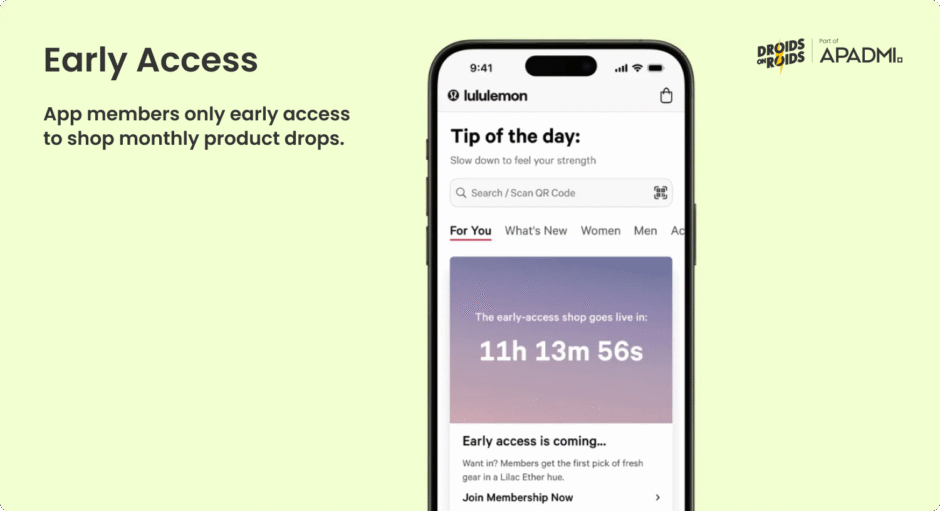
Lululemon’s dual-tier approach achieves an 80% membership rate among customers, and it has reached 22 million members as of 2024. It’s a premium brand that’s monetizing loyalty through services rather than discounts.
The program prioritizes experiences over transactions:
- essential membership is free and offers early access to products, exchanges on sale items, receipt-free returns, and select Peloton classes,
- the paid Studio tier costs $39/month and includes fitness content access,
- in August 2024, Lululemon added “Partner Perks” with exclusive offers from 12 wellness brands like Oura, Barry’s, and Hyperice.
Community connections transcend transactions. Members attend exclusive events, access fitness content, and connect with like-minded wellness enthusiasts. Lululemon avoids discounting its premium products, instead offering convenience and experiences.
Key lessons from successful loyalty program examples
Analyzing these 15 successful programs reveals four critical patterns that transcend industries and drive measurable business results.
Mobile-first design creates competitive advantage
Every successful program prioritizes mobile as the primary interaction point. Starbucks generates 56% of US revenue through mobile ordering integration, while Shell Go+ achieves 25-35% offer activation rates through app-based rewards. T-Mobile Tuesdays reaches 5 million daily participants via mobile-only distribution.
Mobile apps enable instant redemption, location-based offers, and seamless payment integration that become integral to daily routines. The data proves this approach works: programs with strong mobile experiences consistently outperform traditional card-based systems.
Ecosystem integration drives higher customer value
The most financially successful programs extend beyond core business offerings. Alibaba’s 88VIP spans commerce, entertainment, and delivery services, achieving 98% retention rates. Delta combines airline services with financial partnerships, generating $3.8 billion in loyalty revenue – more than many airlines’ total revenue.
Chase Ultimate Rewards demonstrates ecosystem power in financial services, connecting travel, dining, and everyday spending across multiple card products. These programs work because they increase switching costs while providing genuine value across multiple life areas.
Subscription models transform unit economics
Upfront payment programs like Costco ($4.8 billion membership revenue, 90.4% renewal rate) and DoorDash DashPass (22 million subscribers) create psychological commitment while delivering immediate value. AMC’s A-List subscription helped achieve record revenue per patron in 2024.
Subscription psychology drives consistent usage and predictable revenue streams. Target Circle 360 members spend eight times more than free members, demonstrating how paid tiers can dramatically increase customer lifetime value.
Simplicity beats complexity
The most successful programs are easy to understand. Kroger Plus (95% customer participation) uses simple 1 point per $1 mechanics. CVS ExtraCare offers straightforward 2% cashback. Lululemon avoids points entirely, focusing on experiential benefits.
T-Mobile Tuesdays eliminated points altogether, offering weekly surprises instead. This simplification helped T-Mobile achieve an 82 NPS score in an industry that averages 31. Complex earning rules and confusing redemption processes consistently lead to program failure.
How to choose the right loyalty program type for your business
Match your program structure to natural customer behavior patterns and business model characteristics.
High-frequency businesses: Choose points-based programs
Coffee shops, grocery stores, and quick-service restaurants benefit from points systems that reward regular visits. Starbucks’ 150 stars = free drink creates clear, achievable goals that drive frequency. Kroger’s success proves this model works for everyday purchases.
Premium businesses: Choose tiered or experiential programs
Airlines, hotels, and luxury brands should focus on status and exclusive access. Delta’s four-tier structure generates billions through elite benefits. Lululemon’s membership avoids discounts entirely, instead offering early product access and exclusive events.
Convenience businesses: Choose subscription models
Services providing ongoing value justify recurring fees. DoorDash’s unlimited delivery removes friction from ordering. Costco’s bulk pricing makes membership savings immediately visible at checkout.
Commoditized industries: Choose surprise-based programs
When products are similar across competitors, emotional engagement differentiates. T-Mobile Tuesdays’ weekly freebies create brand affinity in telecommunications. Shell Go+ combines points with pay-at-pump convenience to differentiate fuel retail.
Digital capabilities matter
Strong mobile and data capabilities enable sophisticated personalization. Limited technical resources should start with simpler structures. CVS leverages 74 million member data for retail media revenue. AdiClub connects fitness tracking across multiple apps for unique earning opportunities.
Your loyalty program can be a key revenue driver
The financial impact is undeniable. Loyalty programs aren’t marketing expenses, but strategic assets that have the potential to transform business models.
Success requires clear value customers understand instantly, mobile-first design, and continuous evolution based on feedback. Don’t just copy competitors – understand your customers’ behavior patterns and design benefits addressing real needs rather than satisfying artificial requirements.
Start simple, focus on genuine value, and build customer relationships that will differentiate your business for years to come.