Table of contents
The right eCommerce mobile app features make the difference between apps customers delete and apps that drive revenue. Mobile commerce hit $2.07 trillion in 2024, accounting for 57% of all eCommerce sales worldwide. Shopping apps convert at rates nearly triple that of mobile websites, and 88% of American consumers already have at least one shopping app installed. Building a successful mobile shopping app isn’t about cramming in features, it’s about choosing the ones that directly impact conversion, retention, and customer lifetime value.
Essential mobile app features for eCommerce success:
- Revenue foundations: Guest checkout, smart search, streamlined checkout, multiple payment options, order tracking
- Growth drivers: Push notifications (3x retention), loyalty programs, personalization (5-15% revenue lift), wishlist
- Trust builders: Customer reviews, easy returns, responsive support
- Competitive edge: AR try-on, social commerce, barcode scanning
This guide breaks down 18 proven mobile shopping app features organized by business impact, with real data from retailers who’ve made these investments work.
Essential eCommerce app features at a glance
| Feature | Primary Benefit | Business Impact |
| 1. Guest Checkout | Eliminates registration friction | Recovers 26% of cart abandoners |
| 2. Smart Search | Converts high-intent browsers | 2-3x higher conversion than browsing |
| 3. Visual Search | Simplifies product discovery | Powers apps with 10M+ downloads |
| 4. Product Galleries | Reduces purchase uncertainty | 95% read reviews before buying |
| 5. Streamlined Checkout | Recovers abandoned carts | 35% potential conversion improvement |
| 6. Multiple Payments | Removes purchase barriers | 39% of purchases via digital wallets |
| 7. Transparent Shipping | Prevents cost surprises | Eliminates #1 cause of abandonment |
| 8. Order Tracking | Reduces support inquiries | Proactive updates build trust |
| 9. Push Notifications | Drives retention | 3x retention at 90 days |
| 10. Wishlist | Extends consideration time | Enables price drop conversions |
| 11. Loyalty Programs | Increases repeat purchases | #1 most valued feature (63.4%) |
| 12. AI Recommendations | Lifts average order value | 5-15% revenue increase |
| 13. Customer Reviews | Builds purchase confidence | Essential for conversion |
| 14. Live Support | Resolves purchase blockers | Highest satisfaction ratings |
| 15. Easy Returns | Builds trust | Turns problems into loyalty |
| 16. AR Try-On | Removes fit uncertainty | Works for furniture, fashion, beauty |
| 17. Social Commerce | Enables discovery | Best for visual categories |
| 18. Barcode Scanning | Bridges online/offline | Critical for omnichannel |
Why mobile app features matter more than you think
Apps fundamentally change buying behavior. Customers acquired through apps deliver three times more lifetime value than mobile web users. Brands report that app users drive 62% of total revenue despite representing just 16% of traffic.
Mobile web forces customers through repeated logins, slow loads, and checkout flows not built for thumbs. Apps eliminate that friction. Cart abandonment on mobile web ranges from 70-85%, compared with desktop’s 66-70%. Shopping apps fix these problems permanently. Consumers now spend 41.9 billion hours annually using shopping apps globally. That’s active shopping time, not browsing.
1. Guest checkout and simple registration
Baymard Institute’s research shows that 26% of cart abandonment occurs when sites require account creation. One in four potential customers would rather leave than create an account. That’s not a minor inconvenience – it’s a quarter of your potential revenue walking away at the finish line.
Let people shop without logging in. Guest checkout should be the default path, not a buried option. The psychology is straightforward: new customers want to test your service before committing. Forcing registration before they’ve successfully completed a single order feels presumptuous.
For users who want accounts, social login through Google or Apple simplifies the process. Returning customers can instantly access the app with biometric authentication – Face ID or fingerprint unlock – without passwords or typing.
Platform requirement: iOS requires Sign in with Apple if you offer any social login. It’s not optional. Google Sign-In dominates on Android with higher opt-in rates than other providers. Both platforms now expect biometric authentication for returning users. It’s table stakes, not a premium feature.
The pattern that works: let new users browse and purchase as guests, then offer account creation after their first order completes. “Save your info for faster checkout next time?” converts far better than requiring upfront registration. You can always convert them later. You can’t recover the 26% who bounce at forced registration.
2. Smart search with autocomplete and filters
Search users convert at 2-3x the rate of browsers because they know what they want. The difference between good search and bad search shows up immediately in your revenue. Poor search implementations lose customers fast – studies show 68% of users will leave a site entirely if search doesn’t work well.
Your mobile app search bar needs autocomplete that actually helps. When someone types “blue run,” your system should surface “blue running shoes” before they finish typing. Typo tolerance matters too – “sneeker” should be corrected to “sneaker” without the user even noticing you corrected it.
What good search includes: Predictive autocomplete, typo correction, recent search history, filtering by category/price/size/color/brand, sort options (price, popularity, rating, newest), and saved searches across sessions.
Basic filters let users narrow by category, price, size, color, and brand. Save their recent searches so they can pick up where they left off. That persistence across sessions matters – customers often browse in one session and return to purchase later.
Voice search deserves mention. Despite the hype, shopping adoption remains low. Add it only if your data shows customers asking for it. Otherwise, focus resources on autocomplete and filters – they are used daily.
3. Visual search and barcode scanning
For fashion and home categories, visual search changes the game. Customer sees shoes they like, takes a photo, finds them in your app. Barcode scanning works similarly: scan the product in the store, check the price and availability.
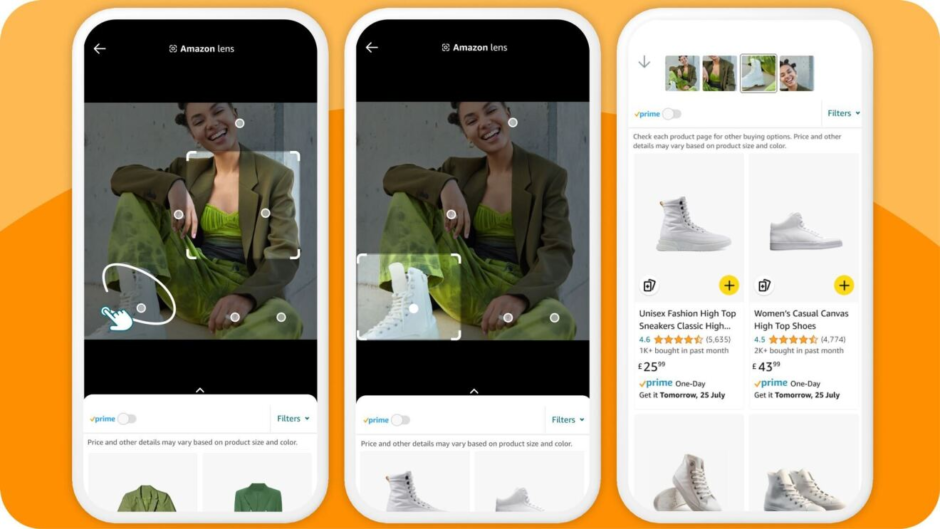
When we built the CCC Shoes & Bags app, visual search, alongside strong filtering, drove 10 million downloads across 8 European markets and a 280% increase in mobile sales. Search and discovery directly drive conversion.
4. Rich product pages with galleries and reviews
On mobile, product pages do all the work that physical stores accomplish through touch, try-on, and examination. High-resolution images with zoom, multiple angles, detailed specifications, and customer reviews reduce the purchase uncertainty that stops conversions.
Ninety-five percent of consumers read reviews before buying. Products with 5+ reviews convert measurably higher than those without. Reviews with photos from real customers work even better – they prove the product looks as advertised and performs as claimed.
Essential product page elements: High-resolution images (minimum 3-5 per product), pinch-to-zoom functionality, multiple angles, detailed specifications, customer reviews with photos, star ratings, and verified purchase badges.
For fashion and footwear, size guides prevent returns. For furniture and home goods, dimensions with real-world comparisons help customers visualize fit. Display stock availability upfront – showing “Only 3 left” creates urgency, while “Out of stock” prevents disappointment at checkout.
The gallery implementation matters. Swipe gestures feel natural on mobile. Pinch-to-zoom should work smoothly without lag. Loading large images without slowing the experience requires proper compression and caching. Get these details wrong, and customers notice immediately.
5. Streamlined checkout process
Seventy percent of shopping carts get abandoned before purchase. Baymard Institute’s research shows that better checkout design can recover 35% of that lost revenue. That’s not incremental improvement – it’s the difference between mediocre performance and actually making money on your customer acquisition costs.
Mobile checkout abandonment runs even higher than desktop. The smaller screen, slower typing, and reduced patience mean every unnecessary step costs you customers. The reasons are well documented: 48% of abandonments occur due to unexpected costs revealed late in the process. Another 26% abandon when forced to create accounts. 25% leave due to complex checkout flows.
The solutions are straightforward: Show shipping costs and delivery timelines early – on product pages or in the cart, not at final confirmation. Make guest checkout the obvious path, not hidden under “continue as guest” links. Keep the checkout to a maximum of two steps: shipping/payment information, then confirmation.
Use address autocomplete so customers don’t have to type full addresses on phone keyboards. Save carts across sessions so customers who leave can pick up exactly where they stopped. This persistence is critical as many mobile users browse during commutes or breaks, then complete purchases later at home.
Display security badges and recognized payment logos. Show “Secured by SSL” or “256-bit encryption” messaging. These aren’t just decorative – they address the 19% who abandon due to security concerns. Trust indicators reduce anxiety at the moment when customers are most concerned about sharing payment information.
Your checkout is where all your marketing spend converts. One extra form field, one unexpected fee, or a confusing flow doesn’t just hurt conversion a little. It breaks the entire economics of customer acquisition. Optimize here first.
6. Multiple payment options
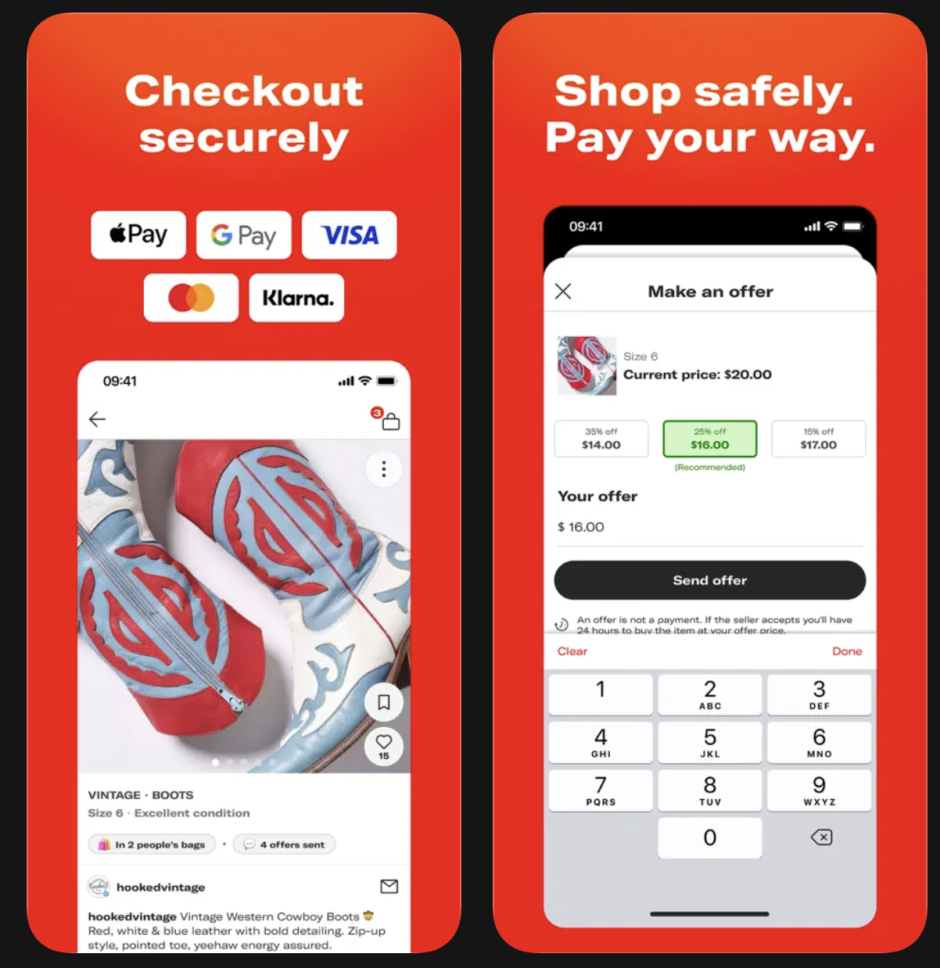
Limited payment options kill deals at the finish line. Digital wallets now account for 39% of US online purchases. If your mobile shopping app doesn’t support Apple Pay, Google Pay, or PayPal, you’re locking out customers who’ve already decided to buy.
Essential payment methods to support: Credit and debit cards (baseline), Apple Pay (required on iOS if offering wallets), Google Pay (standard on Android), PayPal (trusted fallback), and Buy Now Pay Later services (Klarna, Afterpay, Affirm) for products over $100.
Buy Now Pay Later changes the game for higher-priced products. Services like Klarna, Afterpay, and Affirm let customers split purchases into installments, reducing the sticker shock of expensive items. The conversion impact is measurable, especially for products over $100. Furniture, electronics, and premium fashion see particularly strong BNPL adoption.
Platform rules matter here. Apple Pay is required on iOS if you offer any digital wallet options – it’s not optional. Google Pay is standard on Android but not technically required. Both work by storing payment info securely at the OS level, which customers trust more than giving card details to every app individually.
7. Transparent shipping and delivery options
48% of cart abandonment traces to unexpected fees. Show delivery costs before checkout, offer multiple shipping options (standard, express, click & collect), provide estimated delivery dates, and use free-shipping thresholds. “Free shipping over $50” encourages larger baskets while giving customers control.
8. Order tracking and status updates
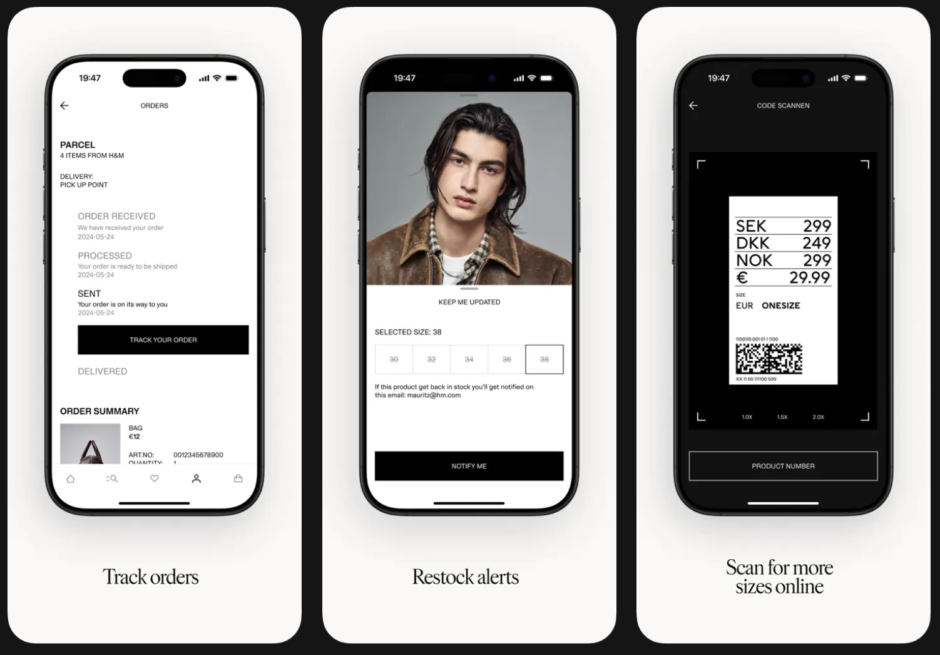
Push notifications for “shipped,” “out for delivery,” and “delivered” prevent support tickets. Let customers check the status anytime in-app. Show carrier info and tracking numbers. Clear tracking prevents anxiety, bad reviews, and lost repeat orders.
9. Push notifications for retention
Push notifications deliver 3x retention at 90 days. Abandoned cart push sees 16% click-through rates – dramatically higher than email.
High-ROI notification types: Abandoned cart recovery (highest ROI), back-in-stock alerts, flash sales, order updates, personalized recommendations, and price drop alerts.
Platform differences: Android users opt in by default (10.7% reaction rate). iOS requires permission (4.9% reaction rate, but higher-quality engagement).
Critical warning: Over-notification drives uninstalls. Personalize based on behavior. CCC’s app uses push notifications for new drops and personalized style recommendations, contributing to a 120% year-over-year increase in active users.
10. Wishlist with price drop alerts
Wishlists extend consideration time without losing customers. Essential features: save unlimited items, price drop alerts, low stock alerts, easy add-to-cart, share for gifts, and cross-device sync. Pair with push for price drops to create a conversion loop: save item → price drops → notification → purchase.
11. Loyalty programs and rewards
63.4% of app users rank loyalty programs as the most valuable feature. Essentials: points per purchase, tiered rewards, exclusive discounts, early sale access, birthday rewards, and referrals. Loyalty programs increase average order value and purchase frequency.
CCC integrated their CCC Club program directly into the app for points tracking, exclusive deals, and in-app rewards redemption – part of what drove 10 million downloads and triple award wins.
12. AI-powered product recommendations
Personalization delivers 5-15% revenue lifts. Product recommendations drive up to 31% of eCommerce revenue. Top performers see 40% more revenue from personalized experiences.
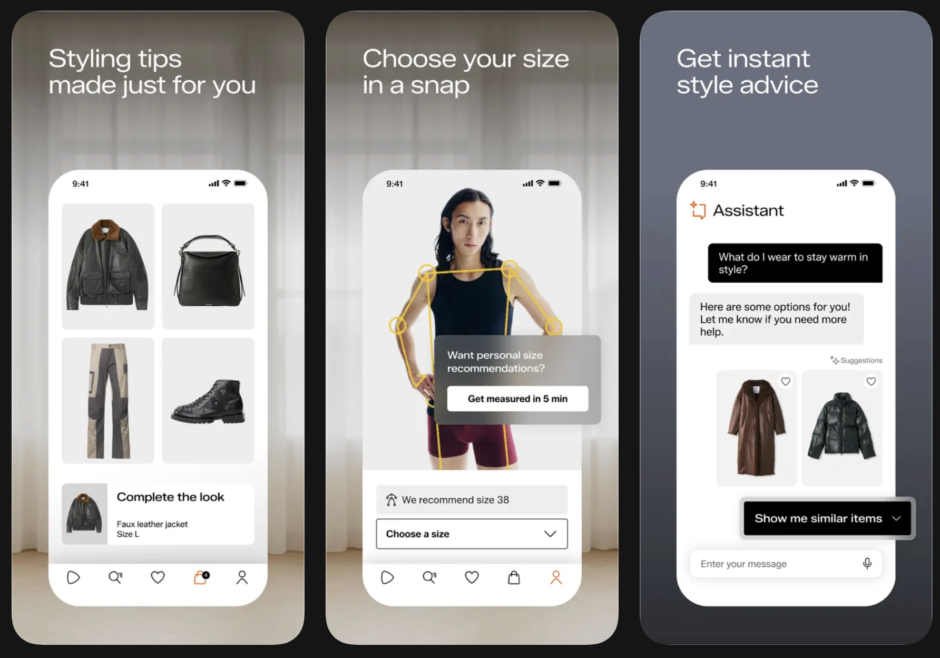
Start simple: “Customers also bought” (works with minimal data), “Recently viewed” (reminds users), then add AI-powered suggestions based on browsing history. Personalized homepage content makes every visit feel tailored.
13. Customer reviews and ratings
Ninety-five percent of consumers read reviews before buying. Products with reviews convert better. Essential features: star ratings, written reviews with verification badges, photo/video reviews, sort options (helpful, recent, rating), and seller responses. Reviews with photos prove products match claims.
14. Responsive customer support
Live chat gets the highest satisfaction. AI chatbots handle simple queries (order status, FAQs). Phone and email serve complex issues. In-app help centers answer common questions. Customers strongly prefer human support over bots for anything beyond basics.
15. Easy returns and refund processing
Clear return processes build trust. Essential features: in-app return requests, print-at-home labels, return status tracking, refund visibility, and product replacement options. Customers who have good return experiences often become repeat buyers – they remember you made it easy when something went wrong.
16. Augmented Reality and Virtual Try-On
AR works for furniture, fashion accessories, and beauty categories where visualization drives decisions. Customers preview furniture in rooms (IKEA), try on glasses (Warby Parker), or test makeup shades (Sephora). The main cost is creating 3D models, not development. CCC’s virtual fitting room for shoes contributed to award-winning UX. Add only if your category benefits from visualization.

You might also like: 5 Transformative Use Cases of Computer Vision in Retail
17. Social commerce integration
Share products to Instagram/Facebook/TikTok, buy directly from social posts (Instagram Shopping, TikTok Shop), and feature user-generated content on product pages. Works best for fashion, beauty, and lifestyle brands where visual discovery drives purchases. Essential if customers discover your products through social media, optional otherwise.
18. Barcode scanning and in-store features
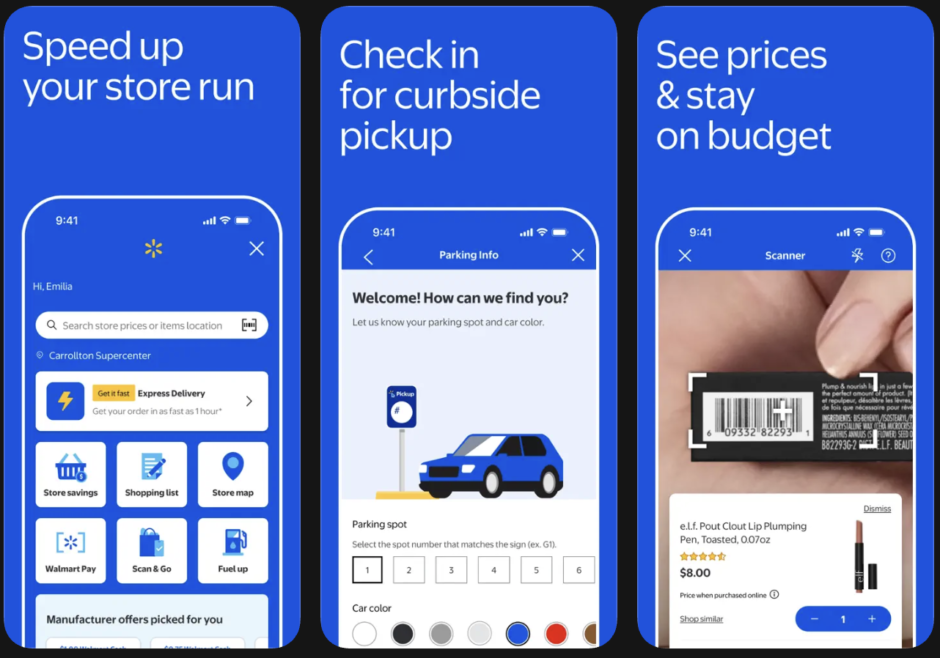
Scan barcodes in physical stores to check prices, read reviews, and add to wishlists. Relevant for omnichannel retailers (physical + digital). Include click & collect (buy online, pick up in store), store locator with real-time inventory, and in-store mode. Skip if you’re online-only. Here is a great example of Walmart mobile app.
Feature prioritization: What to build first
Tier 1: Revenue Foundations (Build First) Guest checkout, smart search, rich product pages, streamlined checkout, multiple payments, order tracking. These six capabilities enable end-to-end purchase.
Tier 2: Growth Drivers (Add to Scale) Push notifications, wishlists, loyalty programs, product recommendations, returns, customer support. These increase repeat purchases and lifetime value.
Tier 3: Competitive Differentiators (Add When Core is Solid) Visual search, AR, social commerce, personalized AI, in-store features, multi-currency. These help you stand out in crowded markets.
At Droids On Roids, we start eCommerce projects with Product Design Workshops to identify which features drive the most value for your business model. That’s how we helped CCC reach 10 million downloads, triple the number of awards, and a 280% increase in mobile sales – by matching features to business stage and competitive position, rather than building everything at once.
Key takeaways for your mobile commerce strategy
Mobile commerce is now the dominant shopping channel. It represents 57% of all eCommerce sales globally, heading toward 63% by 2028. The question isn’t whether you need a mobile shopping app. It’s whether your app has the features that actually convert browsers into buyers and one-time purchasers into repeat customers.
Your action plan:
Focus on revenue foundations first. Get guest checkout, search, product pages, checkout, payments, and tracking right. These directly determine the conversion rate. One missing payment method or one unnecessary form field can kill your entire customer acquisition economics.
Layer in growth drivers next. Push notifications deliver 3x retention. Loyalty programs are the #1 most valued feature. Personalization lifts revenue 5-15%. These turn your mobile app from a purchasing tool into a retention engine.
Add differentiators strategically. AR, social commerce, and advanced features work brilliantly for specific verticals. Build them when core features are solid, and data shows customer demand.
The eCommerce apps that win in mobile commerce obsess over the buying journey. Every feature should either reduce friction, build trust, or bring customers back. Everything else is a distraction. Apps convert 3x better than mobile web because they let you fix problems permanently instead of fighting them every session.
Build with that in mind, and you’ll have a mobile shopping app that customers actually use instead of another icon they delete.